Wednesday, March 3, 2021

A Canadian Update

Here’s the link to my brand new Style Altitude article about Canadian skiing this winter: https://www.stylealtitude.com/ski-resorts-canada-coronavirus.html 

Marmot Basin


And here’s an indepth Q & A with Lake Louise’s Robin Locke about how COVID-19 has impacted operations this season: 

Philip Forsey - Powder Day Feb 23 2021 at Lake Louise

When you were prepping for this winter, did you expect to open - and then stay open - this season? 

Robin: “In any given year, predictions regarding the outcome of a season are merely best guesses supported by the best data available, but in the middle of a global pandemic it is impossible to forecast what the circumstances will be even one week to the next. All we can do is prepare and operate as best as possible with an eye to ensuring we have absolutely stringent procedures and protocols in place with regards to health and safety, while recognizing that government regulations and business decisions must adapt according to evolving science and circumstances.” 

How much time and money has it cost you to create COVID-safe codes and infrastructure at Lake Louise? 

Robin: “Since spring 2020, we have been working with industry partners and governments to ensure there is a suite of best practices to help keep our teams, communities and guests as safe as possible. We were able to practice our health and safety procedures over the summer when we were less busy, which helped us open smoothly this winter. It certainly requires significant capital in an already capital-intensive business to operate in a COVID world. Additional staff, changes to the layout of the resort indoors and outdoors, modifications to employee housing and expenditures relating to new equipment, testing and contact tracing, are all extremely expensive. This along with significant loss of revenue from a lack of international visitors and impacts to such traditional key revenue streams, such as food and beverage, ski school and rentals, impact the bottom line negatively and significantly.” 

Lake Louise by Sarah Magyar


Do you think you are safe now to stay open until the typical end of season? On what does this depend?

Robin: “See question 1. As new COVID variants are emerging, it is impossible to predict when life will get back to normal and whether we will see a regression or a progression towards same in the coming months. A lot of people in the industry (and generally) are banking on vaccines as the key to restoring our ability to travel and recreate the way that we used to, and we are certainly hopeful, as well, that vaccines can be rolled out as quickly as possible and prove to be potent and effective against new and emerging variants. At the same time, we must all continue to be diligent with regards to health and safety protocols to help contain the spread and guard against potential outbreaks.” 

New Summit Chairlift at Lake Louise by Philip Forsey

Has Lake Louise village had many COVID cases? How well have you done compared to other ski towns? Have the cases derived from the ski hill or from activities outside of winter sports? 

Robin: “What we hear from infectious disease experts is that skiing and snowboarding are relatively low risk activities for COVID-19 transmission and outdoor settings are far safer than indoors. The sport is a naturally spaced out activity that provides room to roam on the slopes safely at most resorts (this is certainly the case at Lake Louise). These sports also support significant mental and physical well-being, generally. The Lake Louise Ski Resort has an enormous amount of terrain and is able to handle thousands of skiers a day. Our challenge is getting guests dispersed during the 9:30 to 10:30 a.m. rush on weekends, so for that reason, we have implemented a reservation system to help keep visitors safe, which is working quite effectively. 

While skiers will generally be safe, experts advise, those who wish to hit the slopes still need to be mindful of safety precautions; the threat is never zero during a global pandemic. Spread is more likely to happen before or after people are enjoying the mountains, such as when they are gearing up or warming up in a crowded indoor area; masks should be worn and physical distancing must be maintained. 

We are fortunate at the Lake Louise Ski Resort to have more indoor space than some of our neighbours do, but we have nevertheless reduced capacity in our lodges, on our lifts, and erected additional tents to ensure visitors have room to spread out safely. Staff members at ski resorts are more likely than visitors to become infected and this is usually due to staff living in close quarters and activities that occur in the evenings outside of the ski areas. In November, six cases were identified over four different staff accommodations at Lake Louise Ski Resort. Pro-active testing was the most effective way to contain the transmission. Positive cases eventually grew to less than 20, but fortunately no one became seriously ill or hospitalized. About 85 to 90 per cent of resort staff were swiftly tested after the initial cases were identified, in part to try to catch all asymptomatic cases, and this was likely one of the best measures that could have been taken to help curtail the spread. 

View of the lake at the Lake Louise Ski Resort

Also fortunately, staff accommodations at the Lake Louise Ski Resort are not overcrowded. In the past, almost half of our staff were international young people from Australia, New Zealand and other countries. But since the pandemic shut down international borders, most staff this season are university students who are choosing not to go back to school, as well as seniors who aren’t travelling – as such, most of them are staying at their own homes in the area. Additionally, we built two new staff housing complexes this summer which has helped create more room. 

Europe and the U.S. have seen more COVID cases than ski towns in Canada, though there have been outbreaks in ski towns in B.C. as well as smaller clusters in Alberta. As of February 17th, 2021, there are zero active cases in Lake Louise. Lake Louise, because of its location in the heart of a World Heritage Site and in the middle of a group of National Parks as large as Switzerland, has features that are unique in the world. For example, our comfortable carrying capacity is designed around a National Park sense of place which means nature and wilderness take centre stage, and the facilities and terrain are purposely designed and built such that there is room to spread out more than virtually any other resort on the planet. On a busy day, one can often ski many of our runs without seeing another skier. Because of the above, the threat of catching COVID from another skier is remote.” 

Fresh Tracks in West Bowl Lake Louise


Can you tell us about your new territory - it's been compared to Revelstoke. 

Robin: “West Bowl is a vast area (480 acres of new terrain) capped by the summit of Whitehorn Mountain, on the front face of the resort. It offers breathtaking views of the majestic Canadian Rockies, overlooking the Bow Valley and the scenic backdrop of Lake Louise and Victoria Glacier. Located west of the ski resort’s base, this new area of wilderness ski and snowboard terrain will carry on the reputation of Lake Louise’s back bowls, but in this case on the front side. 

To facilitate this grand opening, a two-kilometer long ski-out has been constructed from the bottom of the various chutes, gullies and bowls comprising West Bowl, to the junction of Men’s Downhill and Juniper Jungle. A new quad chairlift has also been installed, which starts from the saddle below the top station of the Top of the World chairlift. In just four minutes, the new Summit Chair can whisk skiers and riders up the ridge of Whitehorn Mountain, giving easy access to the new West Bowl terrain as well as the back bowls, and the existing runs previously accessed by the Summit Platter. 

Lake Louise West Bowl

The natural landscape of West Bowl lends itself well to some of the best advanced-intermediate through expert terrain in Canada. Many would consider the newly opened terrain as “side-country,” with naturally gladed ski routes giving endless options of fall lines. Sections of West Bowl are divided into zones, with no precise runs, letting skiers and snowboarders chart their course and explore the bowl and newly gladed terrain in their own way. This authentic wilderness skiing and snowboarding experience is enhanced with natural snow conditions and no machine grooming. However, since West Bowl is now in-bounds terrain, this allows us to provide snow control, avalanche safety and ski patrol services. This is wilderness skiing at its best, and areas will open in stages throughout the season as Mother Nature allows. Skiers and boarders are advised to carry avalanche safety gear and know how to use it.” 

No-one has a crystal ball, but what are your hopes for the summer season and then next winter? Do you expect to host Winterstart World Cup again? 

Robin: “The ability to operate in four seasons is absolutely imperative from a profitability standpoint, so we certainly hope that we will be able to run our popular Lake Louise Sightseeing Gondola from May to October, where guests often get a rare chance to see Grizzly Bears from the safety of the lift, that we can to continue to offer our interpretive programs, which educate and inspire about Banff National Park wilderness, wildlife and values, and that we can host guests who wish to dine amid our spectacular alpine setting this summer and fall. Last summer, our visitor numbers - and thus profitability - were significantly reduced, due to not being able to welcome international visitors, so we are hoping the borders open as soon as possible (though there is no indication as yet as to when borders will open to international visitors). We will regardless operate as long as we are able to. 

Lake Louise Sightseeing Gondola - Photo by Chris Moseley

The Lake Louise World Cup Winterstart is traditionally held in November and December. The races began at the resort in 1980 and ran consecutively from 1993 to 2020, with over 100 races having been successfully held here. While the 2020 COVID-19 pandemic caused the 2020 races to be cancelled, we certainly hope that they can return in 2021. The race is one of the select few that hold both the men’s and ladies speed events on the World Cup circuit. It is Canada's premiere alpine ski race, inviting the world's best skiers to the majestic Canadian Rocky Mountains each year to start the World Cup speed season; the only Canadian stop on the FIS world cup tour. Usually, the world’s best alpine racers, hundreds of volunteers, media and support staff descend on Lake Louise to ensure a successful event and at the same time stimulate the local and provincial economy during what would ordinarily be a relatively slow period. 

Lake Louise Winterstart World Cup - Photo by Alpin Canada courtesy of Banff Lake Louise 

The races have historical, cultural, athletic and economic importance, so we will be extremely disappointed if the pandemic continues so as to preclude the hosting of the event for another year. For next winter, providing we are able to open and operate safely, we are very excited about a new chairlift we are planning to install this summer and the opening of new ski terrain to dramatically improve the experience for novice skiers. The new Juniper chairlift will be installed at the West Side of the base area and meet a need that has existed for many years to provide an area that is more advanced than the Sunny Side learning area, yet less daunting than the green runs which are accessed from the existing chairlifts at the resort.”

And don't forget to check out this article: https://www.stylealtitude.com/ski-resorts-canada-coronavirus.html 

Monday, January 25, 2021

Grouse Mountain, BC, Canada

Rupert at Grouse Mountain, sporting his Alchemy of Ride ski jacket

Knocking on 100 years old, Grouse Mountain is a locals’ ski area in North Vancouver. With British Columbia’s lockdown logic that you should visit the ski resort nearest to where you live, my son Rupert tried it out recently. Having grown up skiing in the Alps and the Rockies in Alberta and BC, he’s now studying (online) at the University of British Columbia, earning credits towards doing a Masters in Counseling Psychology. 

Photography courtesy of Grouse Mountain

Here’s his report: “On Friday of last week, I was fortunate enough to get a reprieve from a busy first week of classes and head up to Grouse Mountain with a close friend of mine. The drive to Grouse was just about 30 minutes from East Vancouver, and parking was easy to find upon arrival. I had no knowledge whatsoever of Grouse Mountain skiing and had created an image in my head that it was going to be a tiny ski hill, similar to Canada Olympic Park in Calgary with somewhat limited options. 

Photography courtesy of Grouse Mountain

I was pleasantly surprised from the outset, therefore, when I found that we were going to have to begin by taking a lovely panoramic gondola up to the base of the hill, which allowed lush views of the surrounding area, especially as the sun was beginning to peek out of the blanket of clouds that had smothered Vancouver for most of the week. 

Photography courtesy of Grouse Mountain

My friend Ma had purchased a Y2Play pass, which not only allows him to ski on Grouse for the entire season, but also offers him a free ski waxing, three lift tickets to Revelstoke (one of my favourite resorts), and one complimentary lift pass for a friend. He graciously allowed me to join him on that lift ticket and we made our way up to the top of the mountain. 

Photography courtesy of Grouse Mountain

The sun was shining and my spirits were high when I got to the top, especially since I knew this was most likely the only ski day that I would have this season. The hill was bigger than I expected, with four chairlifts and at least 20 or more runs, and we spent our time exploring all that it had to offer. Ma had just taught himself skiing last year and, while I thought he was already an excellent skier, he told me that he wanted to spend some of the time working on ski drills that he had learnt from YouTube, giving me time to explore on my own. 

Photography courtesy of Grouse Mountain

I ripped down the slopes quickly although cautious of icy patches or ground that showed up from beneath the snow due to the warm winter that we have been having here in Vancouver. The weather was probably around seven degrees and, with the sun shining, I had to strip down to just a t-shirt and jacket. I attempted to wear a balaclava, due to the fact that it is mandatory to wear a mask in all the lift lines and on the chairlifts, but found myself too warm, so I just settled for a regular mask. 

Photography courtesy of Grouse Mountain

Later, as we continued our ski together, the clouds began to part even more, allowing us a magnificent view of Vancouver and the surrounding ocean from the summit. Accustomed to inland vistas of large mountain ranges, valleys, and rivers, I have never seen such a contrasting view while skiing, so the image of a snowless ocean and cityscape juxtaposed to the snowy ski hill was ever more impressive. 

Photography courtesy of Grouse Mountain

All in all, I had a wonderful experience up at Grouse, and I would definitely consider getting a season's pass there another year, as it would allow a completely unique experience right on my doorstep.” 

Photography courtesy of Grouse Mountain

Grouse’s first official ski season was way back in 1926 – although the mountain was named and famed by hikers in 1894 - and it actually has 33 runs, six terrain parks, 15 night skiing runs, 9km of snowshoe trails and the North Shore’s most extensive snowmaking system. One of its runs – The Cut – was ranked in the top 100 in the world by CNN Travel. As well as a comprehensive winter menu of activities, Grouse also runs a summer activities’ program and is a popular wedding venue. 

Links: 

Website: https://www.grousemountain.com/ 

Environment and Sustainability: https://www.grousemountain.com/blue-grouse-sustainability 

Facebook: https://www.facebook.com/grousemountain/ 

Twitter: https://twitter.com/grousemountain 

Instagram: https://www.instagram.com/grousemountain/ 

Pinterest: https://www.pinterest.com/grousemountain/ 

Tripadvisor: https://www.tripadvisor.com/Attraction_Review-g181717-d156264-Reviews-Grouse_Mountain-North_Vancouver_British_Columbia.html

Rupert (left) with his brother Fergus (right) - both wearing Alchemy of Ride in Sun Peaks, BC
where they both spent the majority of the ski season last winter


If you are interested, Rupert wrote a fascinating blog this summer about his solo job manning a firetower in the far north of Alberta for three months or so: https://thebearandthetower.blogspot.com/ While there, he also wrote his first novel. Here's a summary: "Martin is stuck in an endless, burdensome loop, spending his days adhering to a strict schedule of monotonous tasks that his off-the-grid lifestyle requires. He is entirely ignorant of his own dissatisfaction with life, due to a stubborn mental blockage which has repressed his feelings and memories. He continues to plod onwards in misery until a fateful day when, after a challenging morning involving greedy rabbits and a disappointing bucket bath, he ends up meeting a bespectacled bear in the forest. Thus begins a self-exploration that opens up both the past and the true beauty of nature - both within and without." If you would like to read "Spruced Up" by Rupert Hudson, please let me know at louise.hudson2011@gmail.com. Currently looking for a publisher - any ideas?

Wednesday, January 6, 2021

No More No-Skiing Self Pity!
The initial desperate disappointment of a cancelled ski season ….. over; wrenching Christmas without the kids ….. over; 2020’s year of Gloom, Doom - and Zoom ….. over (although I think the regular Zooming is here to stay). Like many other people around the world, it is now time for me, a travel and ski journalist who can neither travel nor ski, to suck it up and start to think about the lost ski season in a different way. I cannot just expunge it from my mind, although I am trying as hard as I can to skim past all those scintillating ski images posted daily on my social media by all my still-skiing friends from Sun Peaks where I should be right now. Instead, I have to re-invent my attitude to a winter of non-skiing and no snow without denying my addiction to wintersports. Although it will be the only season I have missed since my first ski trip ever in 1973, there are far more weighty issues beleaguering the world right now.
Sun Peaks, BC, Canada
So, keen on lists of pros and cons, I’m going to start by listing the “pros” of a ski-less winter: 

1-No ski injuries, no wear and tear on ski-essential joints – thus hopefully giving an extra year of ski longevity in the long run. 
 
2-Time to get a full scale ski plan organized for next winter. Consider: what do you really want to get out of your season, which resorts are on your radar, do you want to try cat or heli-skiing while you still have the energy? Priority: get more skiing next winter to make up for the gap!

3-Opportunity to get ski fit over an entire year rather than the usual last minute rush between Sept and Dec. Methods I’m trying: a more plant-based eating plan launched optimistically this Jan (even if I only do “vegan ’til 6” it’ll be an improvement); ski-focused gym workouts four days per week (while it’s still open and continued at home during the next lockdown); several two-hour-plus nature walks per week (irritatingly intersected by perfunctory golf swings since I’m in the Algarve); occasional games of padel tennis (combo of outdoor squash and tennis wielding a smaller chunky racket); more dance either at home alone or a weekly Zumba class. Lots of help online too. Check out these free ski fitness classes with Bumps for Boomers for example. 

4-Hone your skills with online ski tuition; or try the Ski School App 

5-Opportunity to create a new winter wardrobe hopefully from all the mega sales that will be going on for ski equipment and clothing! 

6-Immense gratitude next season when you finally get your heart’s desire.
Sun Peaks, BC, Canada
The “Vacation Vaccine” 
I won’t labour the “cons” of a winter without travel or skiing but instead focus on the COVID-19 vaccine which I hope to get by autumn 2021 (apparently the 60+ age group is not a priority in Portugal where I’m living). If vaccination vacations start up somewhere soon, I’ll be on the first plane to try to jump the queue! After all, the vaccine is going to be the new passport.

Virtual Skiing 
The other day, I tried lying down with my eyes closed and going through skiing moves down a powder run in my mind to see whether it made me happier or sadder. A kind of meditative virtual reality. The rhythm was easy to recreate mentally, the sinuous side to side motions synchronized with pole planting pleasure emerged, and I found myself in a world of white underfoot and dazzling blue skies above with a huge smile on my face – I could even sense the exhilarating cold even though it was 14 degrees Celsius where I was. It was actually a positive experience just as dreams about skiing make us smile rather than sob. So, I’m going to day dream skiing more often especially if further lockdowns commit us to the couch. BTW – what happened to all those VR ski innovations? Just when we really need it, the techy industry has let us down! This winter’s top Xmas gift should have been VR headsets in which to lose ourselves in perfect snow in ski resorts around the world. Or, better still, a ski machine like the Zwift and Peleton bike equivalents, where we could mimic the moves we miss so much in synch with a screen. One question that has been haunting me in the past few months is “Do we really want to read about travel and skiing when we can’t do either?” Also, are videos of downhill delights just like plunging a knife into the wound? Or do we get something out of vicarious enjoyment? Thinking about it more, I realize that we are happy to watch this sort of stuff during the summer off season when no-one – except those in the Southern hemisphere – can ski. So, why not now when so many of us are denied our winterly fix?
Sun Peaks, BC, Canada
Downhill Discounts 
With extra time on our hands for many of us, gear is something we can all while away hours researching and bargain hunting. Check out the Rossignol Outlet for example or the Warehouse Clearance at Snow+Rock. Obermeyer is on sale at Peter Glenn and North Face has end of season bargains already. Peak Performance fans will like the January prices and Salomon’s promo price points are looking pretty attractive, too.
Sun Peaks, BC, Canada
Double Duty 
This winter, those already in possession of a comprehensive skier’s wardrobe are in prime position to enjoy the enforced al fresco socializing that is a big part of the pandemic. Everywhere around the world whole populations are being forced outdoors for any kind of recreation, fitness and socializing and, for many of us, it is winter and therefore pretty chilly. Who better equipped to deal with this than skiers with their warm wardrobe of upliftingly colourful clothing? Heated Gear: The New Winter Staple If like me you are a heated garment fan, you can help spread the word to the non-initiated and non-skiers that battery heated clothing is the new winter staple. I cannot labour this enough – if you have to socialize in the frosty back garden, on the parky (English slang for chilly) park bench, on the cold stones or sand of a winter beach, on a windswept patio, under a gusty gazebo, on a tailgate, outside what would in former times have been a cosy ski lodge, or huddled around a campfire, you NEED a heated vest or heated mitts, a heated scarf or heated socks, or - perhaps better still – your own heated seat pad. And, why not all of the above? The winter is by no means over and lockdowns are proliferating. These heated garments are no longer namby-pamby accessories but necessities for everyone to enjoy the outdoors. And people are realizing this – Volt Heat has been literally deluged in an avalanche of buyers this winter, emptying its stocks of heated seat pads which are being bought by forward-thinking restauranteurs and bar owners as well as the general public. Thankfully, Volt has geared up its manufacturing potential to produce more stock and there are several other companies who make heated gear. 

When weighing up the cost, you know you’ll use these items regularly from now until around April for all of your outdoor socializing and exercise and then, of course, you’ll be all set for optimizing your skiing next winter. There won’t be a day when you have to give up early because you are too cold. When you are on a chairlift wearing your heated vest, your back will be so cosy as the heated shoulder-blade pads press against the frigid bars of the chair and your chest will be infused with the torso-toasting effects of the front pads. A warm torso, BTW, is what keeps our fingers and toes from shutting down their circulation. If you opt for heated socks, you’ll never feel the pain of frozen toes and it won’t be you taking off your boots and defrosting your feet over heating vents. Heated mitts are the ultimate luxury and you can turn them up and down in concert with internal and external temperature fluctuations. You can even volunteer to be group photographer as a couple of seconds without gloves on will mean nothing to you when you can plunge them back into battery-heated warmth straight afterwards. I haven’t tried the heated scarves yet but I wish I had one on right now when the spotty heating in my stone-walled tile-floored house hasn’t quite kicked in and there’s no sun coming through the windows to warm me up.
Heat Holders Warm Winter Wardrobe 
If you can’t justify the cost of heated gear, then at least indulge in some Heat Holders – I can guarantee that your normal socks will be jealous that you never choose them. Heat Holders thermal socks are rated seven times warmer than regular socks. Although not battery heated, I think they are the warmest socks in the world – apparently due to the Japanese-designed, cashmere-like thermal yarn, looped cushion pile, and intense brushing on the inside. Putting them on feels like plunging your feet into the softest Beanie Babies. For coping with a Portuguese winter, I chose the slipper socks so that I can pad around my icy tiled floors in sublime warmth and comfort (I hate it when they are in the wash – should have bought two pairs!) but they also do regular socks, lite socks, bed socks, and ski socks. And there’s an array of gloves, hats and thermals for men, women and kids if you are interested in an entire Heat Holders winter wardrobe.
Sun Peaks, BC, Canada
Links: 
Sun Peaks Resort, BC, Canada https://www.sunpeaksresort.com/ 
Bumps for Boomers https://www.bumpsforboomers.com/basic-ski-fitness/; 
Drop In Snow https://www.dropin-snow.com/ski-video-tutorials-online-ski-school/ 
Ski School App http://www.skischoolapp.com/ 
Rossignol https://www.rossignol.com/uk/Rossignol-outlet.html 
Snow+Rock https://www.snowandrock.com/c/sale.html 
Obermeyer https://obermeyer.com/ 
Obermeyer at Peter Glenn https://www.peterglenn.com/sale?filters=im_vid_6%3A26 
North Face https://www.thenorthface.com/shop/mens-sale. 
Peak Performance https://www.peakperformance.com/gb/junior/featured/sale-1/ 
Salomon https://www.salomon.com/en-gb/shop-emea/promotions/sale/clothing.html. 
Volt Heat https://voltheat.com/ 
Heat Holders https://www.heatholders.com/ and https://www.heatholders.com/pages/why-heat-holders-are-so-warm

Photos: Courtesy of Sun Peaks Resort 
Special thanks to Kathy and Harold Richins, Roger Mirka and Chris Wilson
Sun Peaks, BC, Canada

Thursday, December 10, 2020

Thoughtful Gifts for a cosy COVID Christmas

This may be a disappointing season for many skiers with its COVID limitations and pandemic unpredictability. But, despite the doubt of downhill delights, a ski-related Christmas gift is still bound to go down well. After all, those who maybe won’t get any skiing this season will be planning to double it down next winter. 


Heated Hedonism for Hill and Home 
Perhaps the most relevant and multi-purpose gift this year is anything and everything heated. Whether it’s a heated vest, heated socks, boot or glove heaters, this gift will do double duty for hill and home. From many years of experimenting, I’ve discovered that battery heated gear extends the enjoyment of picnics on the piste and outdoor après, makes time on chairlifts and Pomas much more comfortable, keeps the body loose and agile, and extends the time you can comfortably stay outside. But, more importantly this winter, heated garments and accessories are trending at home since COVID has driven us all to al fresco socializing and exercising. 

BYO Warmth
Volt Heat has recorded an unprecedented upsurge in demand for its heated seat pads – the new BYO when going out to an outdoor bar or restaurant patio! Just what we all need for our outdoor entertaining. Imagine being cossetted by their heated scarf this winter while luxuriating on or off the slopes, dog walking, social distancing outside your local pub, bar or restaurant, strolling around the park, fatbiking, skating, or dogsledding. Heated gloves or mitts are an obvious fave on the pistes – once tried, always required. And either heated socks or the heating elements that you can get installed in your ski boots are without doubt the best invention to give you longevity on the slopes. 


Balmy Boots
Volt Heat also does nifty heated indoor/outdoor booties which would be lovely on a cold but sunny winter’s day/evening in your garden or on a restaurant patio – and, of course, for ambient al fresco après if you keep them in your backpack for later. There are now also heated jackets, heated thermal mid-layer tops, and heated base layers. Of course, all of these items are rechargeable, just plug in for a few hours – and, after several years of wear, you can buy replacement batteries, chargers, splitter cables, and other gizmos

Toasty Torsos
Chris Haffly has been promoting Volt Heat for many years. “We have seen an uptick for certain products because of COVID,” he told me recently. “One product in particular has been our heated seat cushion which really has been popular. We learned from these customers that they were using them to be able to have gatherings outside at their homes to help guests be comfortable while safely social distancing. We also have had schools and outdoor cafés make purchases because of things moving outside. Other products like our scarf and vests have been popular as well but the seat cushion was a real surprise this year so far.” (BTW – the vests are sublime! The heat pads are across your chest and back ensuring torso toastiness. And when you ride a chairlift, just leaning against the back of the seat intensifies the heat across your shoulders. The battery pack is in a front pocket and has several levels of heat so you can adapt it to the changing conditions throughout the day. I recharge mine as soon as I get home so that I can take it out with me again in the evening.) 

Stocks of the seat pads have now sold out and the company is awaiting its next batch. “Heading into fall/winter months we really didn’t know what to expect of this season because of the pandemic,” notes Haffly. “That uncertainty has been diminished due to the overwhelming amount of sales we have had early on due to social distancing measures. More and more people are doing outside activities, socializing outside and even dining outside. We get weekly calls from restaurant owners inquiring about providing our heated seat cushion to their customers to help them stay warm while dining al fresco. We have had to ramp up production just to be able to keep up with the demand.” This demand has compounded since ski hills started opening cautiously across North America: “As the temperature has started to drop across the USA and Canada we are getting a lot of new customers who we have polled. They state the reason for their purchase was they needed a solution to stay warm while safely practicing social distancing outdoors.” Haffly concludes that people are avidly embracing the whole concept of heated clothing more than ever before for multiple purposes and hopes that this a trend that will outlive the COVID pandemic. 

Volt Heat’s latest ski-related products are the Women’s Impulse Heated Gloves and the Men’s & Women’s Heated Vests, all featuring Bluetooth control. “You no longer have to access the battery to control the battery, just download the simple-to-use Volt app and you can use your phone as your wireless remote,” Haffly explains. 

Powerliners
Other battery-heated goods’ specialists have been innovating this year, too. New from Therm-ic are ‘powerliners’ – heated inners that fit in most ski boot shells with three different settings yielding up to 19 hours of warmth. I’ve always skied with Therm-ic’s battery heat system – the type that has the battery pack attached to the outside of the boots and is wired inside under the soles of the feet. But the new Powerliner will top my Christmas wishlist this year, especially as my liners are falling to pieces after 12 seasons of wear. 


Affordable Alternatives
Obviously battery-heated ski products come with quite a high price tag which not everyone can afford. In that case, Heat Holders socks are another, very affordable option for frigid feet – retailing from just $10. They have been lauded in the media for the past six years as the best socks for bed, for gardening, for winter activities, for travel, for back-to-school, for watching kids’ sports, and for all age groups. The UK-based company, which ships worldwide, also makes equally cozy leggings, tights, base layers, slippers, hats, gloves and blankets. I wrote about their socks myself in my 2015 blog and also in an article about skiing Lake Louise published in the Dallas Morning News recommending them for combatting Canadian cold. Since then, my son and his girlfriend, who both live full time in British Columbia, have reported back to me that they love these socks more than any other and that after five years theirs are now worn to threads. A great idea for stocking stuffers for them this year! 


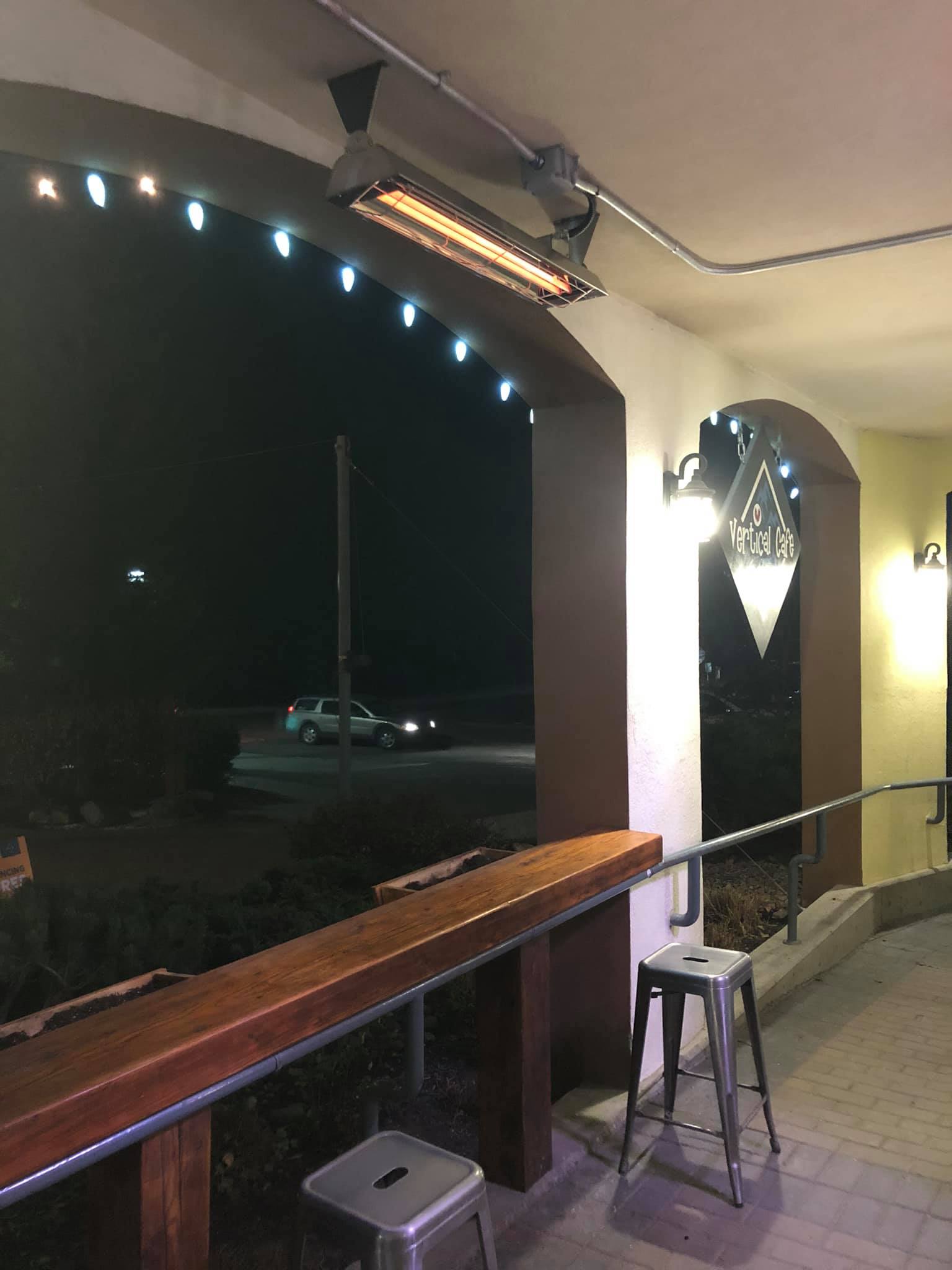
Savvy cafes and restaurants in ski towns are installing outdoor heaters to encourage skiers to linger. For example, Vertical Café in Sun Peaks, BC, Canada is an early adopter of this thoughtful trend, heating their outdoor space for cosy breakfasts, lunches and après snacking. 

Here are some other gift ideas sure to give the skiers in your bubble a much-needed lift: 


The Pandemic’s Book of Genesis:
COVID-19 & Travel - a timely book published in July by Goodfellow UK and written by my husband Dr Simon Hudson while in lockdown in Canmore, Canada this spring. So far it has received dozens of amazing reviews, notably in Travel Weekly in which Arnie Weissmann dubbed it ‘The Pandemic’s Book of Genesis’ because of its depth, scope and predictions that all came true for the tourism, travel, events and hospitality industry. Another insightful review was written in the prestigious International Journal of Tourism Policy, and Simon has been asked to comment on the book in over two dozen media interviews worldwide. He has also been asked to speak at 10 ‘virtual’ global conferences hosted by organizations in the US, India, Canada, Ecuador, and Thailand – so far. “I have just been awarded a $53,586 US Department of Commerce grant to study how organizations in the tourism and hospitality industry are adapting in order to survive COVID-19,” Simon adds. “So if you have any ‘best practices’ examples of what I call ‘COVID-aptability’, do send them my way!” You can see some of Simon's research at: https://covid19andtravel.blogspot.com/ 


Gift of Art & Home Décor: Handblown glass gifts made near Aspen in the Roaring Fork Valley. Aspen Leaf Blown Glass Series includes wine glasses, vases, candle holders in custom designs, size, shape and colour. 


Gift of Nature & Education: With original and artful photography and illustrations, The Hidden Life Around Us includes a foreword by Bruce Finley, environmental writer for The Denver Post. There’s also an essay by acclaimed NatGeo nature photographer and filmmaker, Pete McBride as well as contributions by ACES’ Adam McCurdy and Chris Lane. This is beyond just a gorgeous hardback coffee table book – it is a project that has potential to bring people together locally and globally through interactive nature education. This book grew out of a BioBlitz to survey the species at Hallam Lake Nature Preserve, ACES's campus in the heart of Aspen. On this twenty-five-acre tract of wetland with a five-acre lake, 422 species have been identified. Eighty-one of those species are showcased in the book through striking color photographs and brief, fascinating descriptions. 


Affordable Style: Klaus Obermeyer continues to combine European roots with his Aspen lifestyle in Obermeyer’s latest range of stylish but technical skiwear. Affordable enough for most people, it features everything from simple plain-coloured jackets, pants, fleeces, thermals, and accessories to fancy, fur-trimmed or flowery designs – for men, women and kids. Pictured is the Tuscany II in Boom Bloom.

Functional but Fabulous Footwear: Another gift that crosses over from hill to home is a good pair of boots. Non-slip, waterproof and really warm are the major prerequisites and Bos & Co provides all of this plus Portuguese panache. This year’s top picks feature new Ice Pick Technology as well as Asportuguesas’ cork-based sustainability. Owned by Jim Bosco, the company specializes in Portuguese design, materials and technology for men and women. Focusing on winter and après ski wear, boots like the brand new Astrid are lined with merino wool with extra Primaloft insulation and cold rated to 32 C/25 F and soles are made with superior G2 Ice Grip.


Friday, October 30, 2020

Interview with Dr Simon Hudson, author of the new book COVID-19 & Travel published in July.


Simon, you recently published a book on COVID-19 and Travel written during lockdown last spring. What insight does this book give into the lessons the travel industry can learn from this crisis? 

"First of all, the crisis has highlighted how the tourism and hospitality sector is particularly vulnerable to ‘uncontrollable’ events, and for some destinations or sectors that were over-dependent on tourism, the pandemic has been a wake-up call. We have already seen some destinations recognizing the need for a more diversified economy in order to weather the ups and downs of tourism – Barbados and Portugal, for example, targeting long-stay digital nomads to replace tourists. This could also extend to ski areas once travel restrictions are relaxed as already there has been an uptick in demand to move to the mountains from the domestic market. 

Secondly, what the crisis has also shown is that businesses in the travel sector must be willing to adapt and change their business models in order to survive. I call this ‘COVID-aptability’, and it will be a crucial management skill moving forward. Many organizations did pivot successfully during lockdown: restaurants focused on takeout and delivery for income; commercial airlines flew critical medical supplies and other cargo around the world; and hotels supported the pandemic by providing overflow capacity for hospitals, or by offering people a facility to self-isolate and protect their families. Now many hotels are offering business space for those who are stir-crazy from working in the tight – or noisy – confines of home. However, as travel restrictions ease, organizations will have to consider how they can adapt to the next stage of the pandemic – one characterized by an emphasis on health and safety, technology, lower numbers, and a low-touch economy. 

Related to this, it is important to recognize that we are not going back to normal. The pandemic has changed us all, and the traveler of the future will be more cautious than before, and the public health conditions and hygiene standards of destinations and tourist sites will become a top priority. Travelers will be booking last-minute, taking more staycations, and exploring opportunities for domestic rather than foreign adventures – so target markets may have to change. We may also see an increased demand for health and wellness travel, wilderness trips, private accommodation, and visiting national parks and wilderness areas. 

Another insight is that destinations and organizations that have kept open lines of communication during the crisis are likely to recover faster than others (most cut their communications budget), having communicated to consumers the image of corporate stability during challenging times, and maintained or even increased ‘share of mind’. One excellent example was Zermatt in Switzerland, whose tourism authority took a creative but relevant approach to keep their destination top of mind by projecting one by one the flags of different countries on to the iconic Matterhorn mountain every night during lockdown as a display of solidarity with others. The campaign generated a considerable amount of media and social media worldwide, reaching over 700 million people. 

Finally - some destinations might benefit from a ‘halo effect’ resulting from the positive media they have received in dealing the crisis and for being perceived as relatively ‘COVID-free’ after taking a predominantly health rather than wealth stance in combatting the spread of the virus. New Zealand, the South Pacific, Vietnam, Portugal and Iceland, for example, may move to the top of the list of ‘desired destinations’ for many travelers (and places to live). They may have prioritized the pandemic over short-term profit but there may be a positive long-term economic impact of this strategy if they are able to bounce back quicker than other countries. And from a PR point of view, they have all enjoyed largely positive media coverage since last spring. Those countries which have closed their borders for most of 2020 (and continuing possibly into 2021) may also benefit from pent-up tourism when they are eventually open to all" - Dr Simon Hudson 

Also, check out this signature Travel Weekly review of COVID-19 & Travel: https://www.travelweekly.com/Arnie-Weissmann/The-pandemics-Book-of-Genesis 

If you would like to read more of Dr Hudson's insightful, timely tome, here’s a special 20% discount just for you on the eBook, e-chapters and the printed version: https://www.goodfellowpublishers.com/academic-publishing.php?promoCode=&partnerID=&content=story&storyID=443 - You just need to enter the code covid19disc at checkout for the discount to be deducted.

My latest article published in Ski Luxe Magazine:


Wednesday, September 30, 2020

Ski Luxe Magazine


Autumn’s in the air and snow is even on the ground in a few places! Time to get planning for the ski season. I'm one of the editors for the brand new glitzy and glam SKI LUXE magazine so here are a few articles to whet your winter appetite:
https://skiluxemagazine.com/content/canadas-sun-peaks-resort-review/ (pictured above)
 
https://skiluxemagazine.com/content/ski-ambassadors-and-influencers/
 
https://skiluxemagazine.com/content/winters-wish-list-the-affluent-authenticity-in-aspen/
 
Reviews: https://skiluxemagazine.com/content/streamboat-springs-three-forks-ranch-wellness-retreat-review/
 
Europe: https://skiluxemagazine.com/content/the-cradle-of-alpine-skiing-st-anton-am-arlberg-austria/


Canada - Alberta: https://skiluxemagazine.com/content/lake-louise-ski-resort-feature-review/
 
My pick for must-read article: https://skiluxemagazine.com/content/a-skiers-solace-in-colorados-san-juan-mountains/
 

Also, check out this signature Travel Weekly review of the COVID-19 & Travel book I recently edited:
https://www.travelweekly.com/Arnie-Weissmann/The-pandemics-Book-of-Genesis
 
If you would like to read more, here’s a special 20% discount just for you on the eBook, e-chapters and the printed version: https://www.goodfellowpublishers.com/academic-publishing.php?promoCode=&partnerID=&content=story&storyID=443 
You just need to enter the code covid19disc at checkout for the discount to be deducted.  
 
As usual, I’m always on the hunt for new creative writers to feature in SKI LUXE, so if you know anyone adept with anecdotes or with a tantalizing turn of phrase, please hook me up with them by email - louise.hudson2011@gmail.com. Stories can focus on resorts, industry icons, signature experiences, deluxe accommodation, festivals, après-ski, and gear – all with a topnotch slant.